Artificial outdoor lighting in nature parks and forest reserves is a major ecological challenge. Bright electric lights disrupt the natural nocturnal behaviors of wildlife, disorient migrating birds, and destroy the beautiful dark skies that stargazers love. However, leaving trails completely dark is a safety hazard for hikers and park rangers. To solve this conflict between human safety and ecological preservation, park managers are experimenting with a highly unusual partner: naturally bioluminescent mushrooms.
Unlike genetically engineered plants, certain species of fungi have been glowing naturally in dark forests for millions of years. This biological phenomenon, known as foxfire, is common in species like the Jack-o-Lantern mushroom and the Bitter Oyster fungus. The mushrooms emit a continuous, soft green light through a chemical reaction involving the organic compound luciferin and oxygen. Biologists believe the fungi use this glow to attract nocturnal insects, which then help spread the mushroom spores throughout the forest.
To harness this natural light for human use, ecological designers are cultivating these glowing fungal strains along designated wooden pathways and handrails. By inoculating rotting logs, mulch beds, and wooden trail borders with active mycelium cultures, they can create self-replicating, glowing borders along forest paths. The result is a soft, fairy-tale green glow that provides enough visibility for night hikers to stay on the trail without emitting any harsh light pollution.
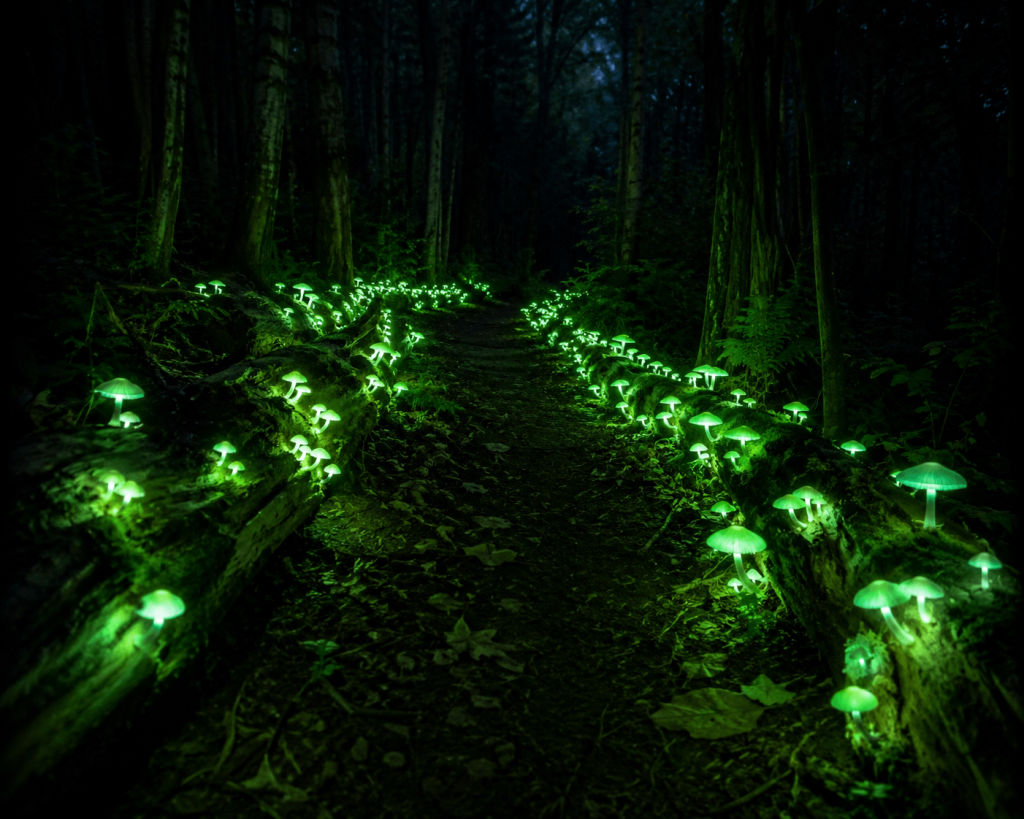
“We are working with the natural forest ecosystem to solve a human design challenge. Fungal lighting provides a gentle, organic guidance system that respects the nocturnal rhythms of the wild.”
The benefits of this fungal lighting system are incredibly compelling. Because the mushrooms feed on dead wood and organic forest waste, the lighting system is completely self-sustaining, requiring zero electricity, zero wiring, and zero maintenance. The mycelium networks actively help decompose organic matter, enriching the forest soil and supporting the local plant life while generating beautiful night-time illumination.
As green tourism and eco-parks grow in popularity, these bioluminescent fungal trails are transitioning from experimental concept to high-demand attractions. They offer visitors a deeply immersive, magical connection to the natural world, showing that we do not need complex, power-hungry technology to navigate the dark. By looking closely at the forest floor, we can find elegant, living systems that light our way forward.