Natural sunlight is essential for human health, boosting productivity and regulating our internal sleep cycles. Unfortunately, modern skyscrapers and deep underground transit systems often trap workers and commuters in sterile, windowless environments illuminated by artificial fluorescent bulbs. To bring real daylight into the deepest parts of our buildings, engineers are deploying optical lighting systems. These systems capture natural sunlight on the roof of a building and pipe it down through flexible fiber optic cables to illuminate interior rooms.
The process begins on the roof of the building with a specialized tracking device called a heliostat. This device features high-efficiency mirrors mounted on a motorized GPS tracking system that continuously follows the path of the sun throughout the day. The mirrors concentrate the natural sunlight and focus it into a single, intense beam, which is then channeled directly into a bundle of flexible glass fiber optic cables running through the building utility shafts.
Because these optical fibers are highly efficient, they can transport the sunlight over hundreds of vertical meters with virtually zero loss of brightness or color quality. Once the light reaches a windowless room or an underground basement, it is released through elegant glass diffusers. The resulting light is indistinguishable from a standard window view, providing full-spectrum, natural daylight that supports human wellness without generating the intense solar heat associated with skylights.
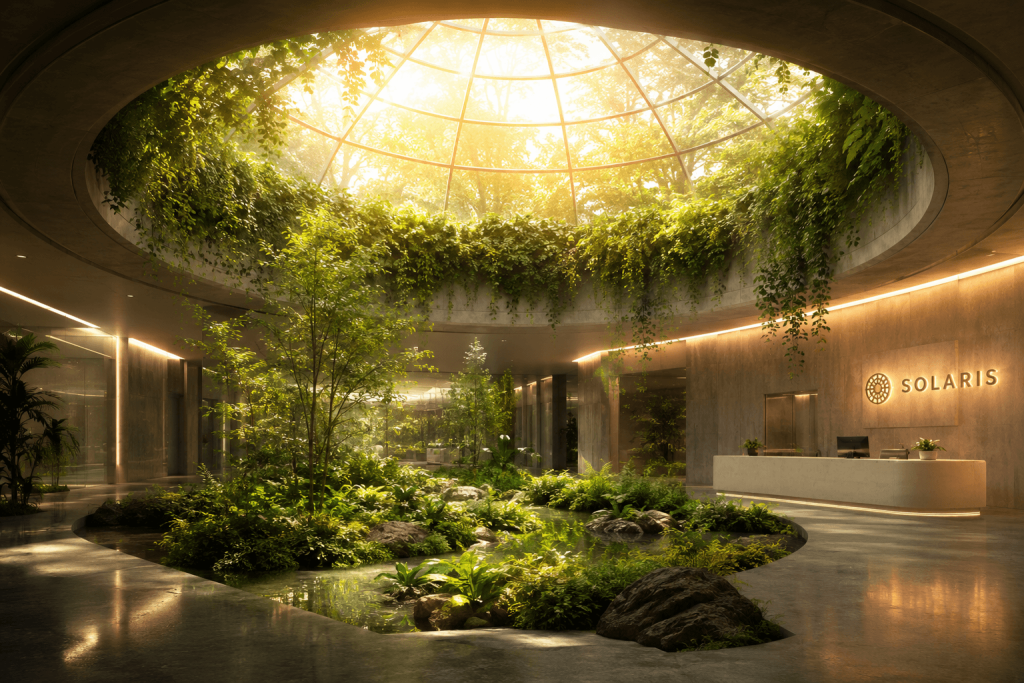
“We are bringing the outdoor environment deep into the built world. By routing real, natural sunlight through optical fibers, we can sustain living green ecosystems and support human health in windowless spaces.”
This technology is incredibly useful for cultivating indoor plants and maintaining vertical farms inside deep building basements. Because the piped sunlight contains the exact wavelengths required for photosynthesis, developers can grow fresh vegetables, herbs, and lush ornamental gardens completely underground. This dramatically reduces the energy costs associated with running power-hungry artificial grow lights, making indoor urban agriculture far more sustainable.
As architectural designs push toward deeper underground developments and highly insulated smart buildings, fiber optic solar piping will become standard infrastructure. It offers a beautiful, highly efficient way to illuminate our living and working spaces while drastically reducing the demand on local electrical grids. The future of architecture is bright, natural, and fluidly connected to the sun above.