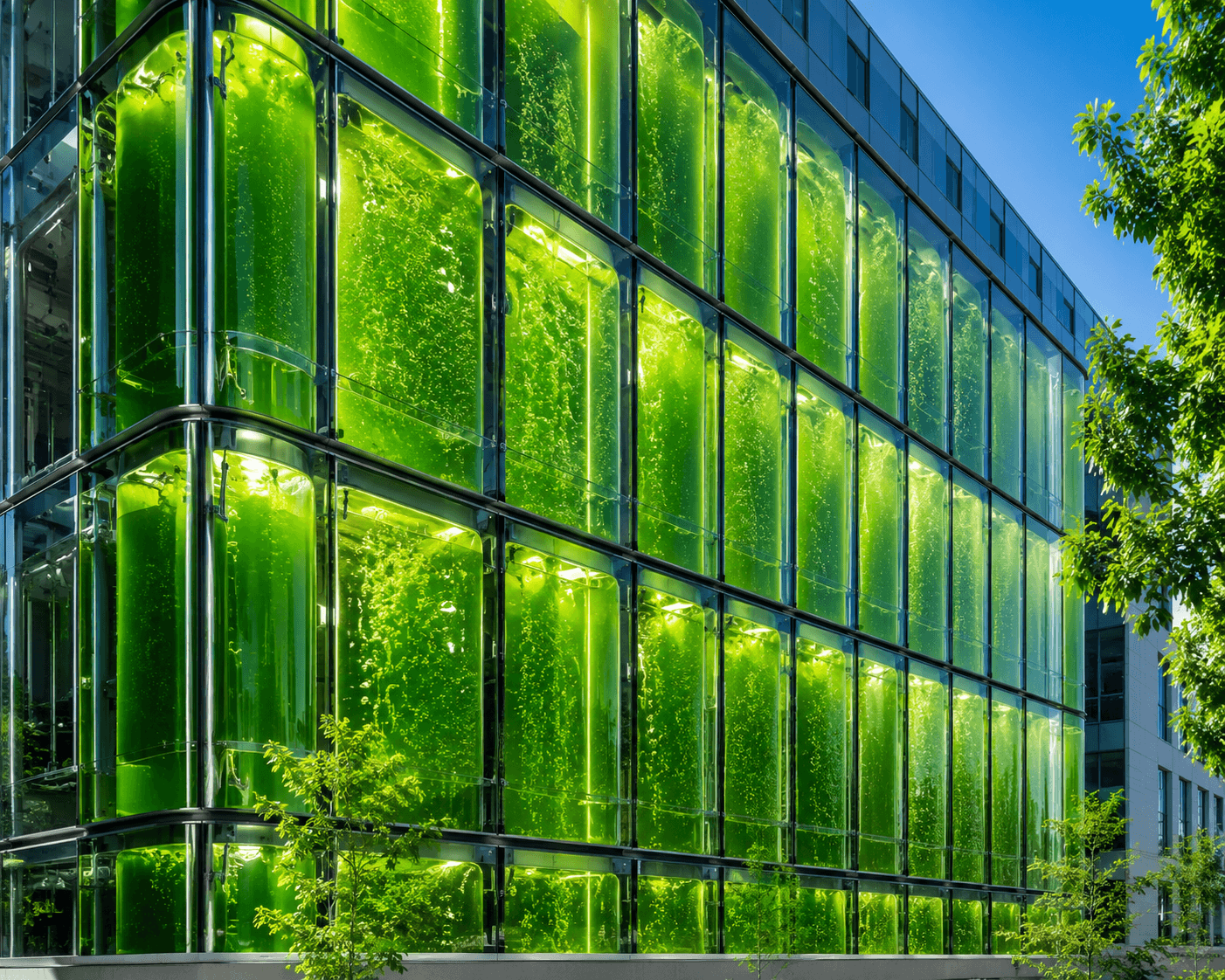
Urban architecture is undergoing a radical change. We have long relied on heavy, insulated walls to keep our buildings comfortable. Now, architects are designing walls that are alive. Bio-facades use living microalgae cultures contained within glass panels to serve as the exterior skin of a building. These panels do not just sit there. They perform active work by absorbing sunlight, generating heat, and scrubbing carbon dioxide from the surrounding city air.
The system works through a process called biomass production. Sunlight stimulates the growth of algae inside the water-filled panels. As the algae grow, they multiply and generate significant amounts of heat and biomass. That heat is captured by the water flowing through the panels and pumped into the building to provide hot water and space heating. Meanwhile, the algae consume the carbon dioxide from the polluted city air and pump out fresh, pure oxygen into the surrounding atmosphere.
The BIQ House in Hamburg, Germany, stands as the proof of concept for this technology. It features the world’s first algae-powered facade. The building’s exterior is covered in glass bioreactors that change intensity based on sunlight. When the sun is strong, the algae grow rapidly, creating natural shade for the interior. When it is cloudy, the panels become more transparent, allowing more light into the building. It is a dynamic, responsive skin that reacts to the environment in real time.

“Buildings should not be static boxes. They should function like trees, breathing in CO2 and generating their own energy. Algae facades bring this vision to life.”
The efficiency of these panels is incredible. Algae grow at a much higher rate than terrestrial plants, meaning they capture carbon and produce energy much faster than the trees on a balcony or a rooftop garden. This makes them the ultimate solution for high-density cities where there is no space for traditional green parks. We can cover entire skyscrapers in these bioreactors to turn a concrete jungle into an active air purification system.
These bio-facades are also highly customizable. Architects can control the density of the algae to create different shades of green, allowing them to design the aesthetic of the building while ensuring optimal performance. As this tech matures, we will see it integrated into mass-market housing projects. We are moving away from the era of sterile, energy-draining buildings toward a future of living, breathing, and carbon-negative urban structures.