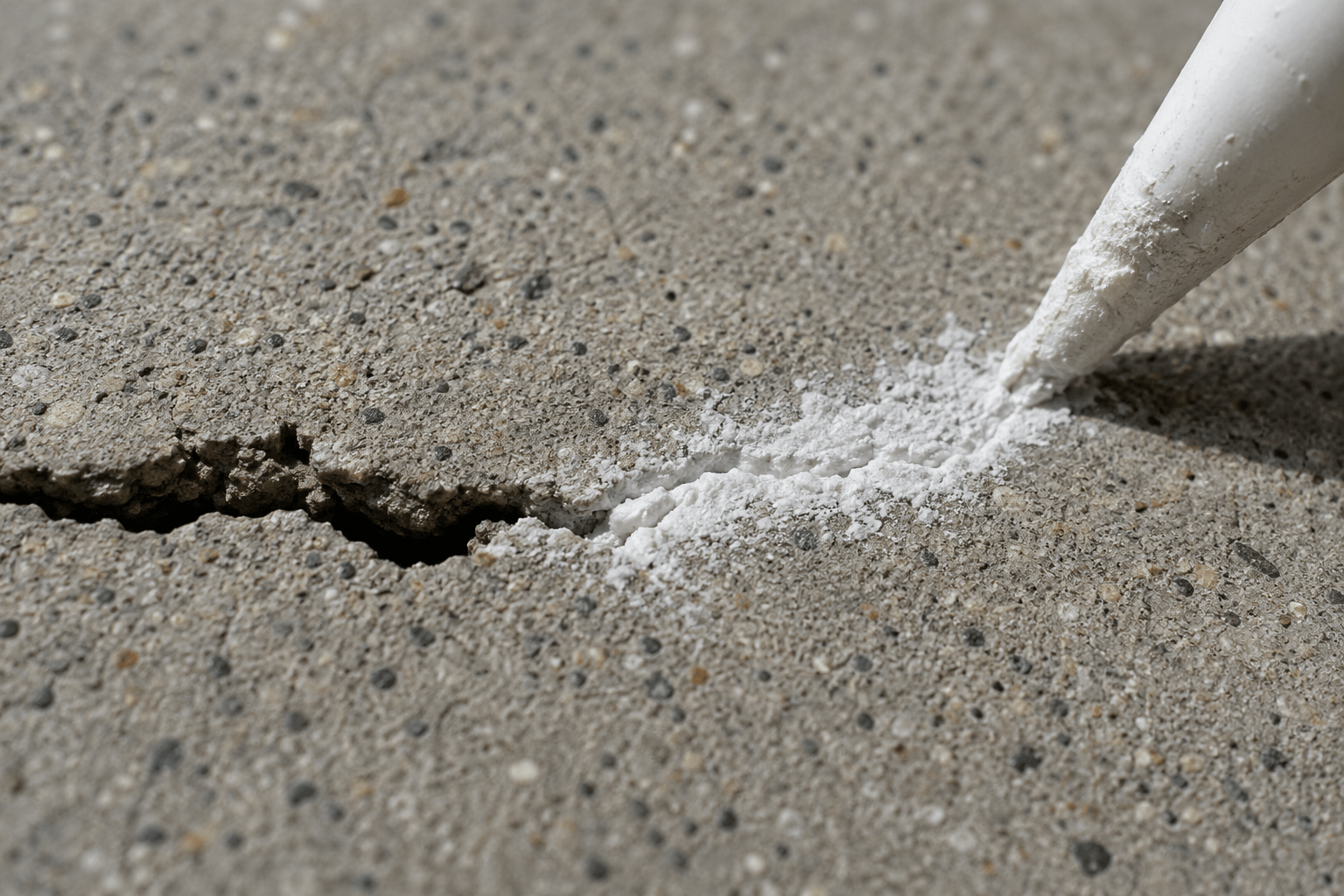
Concrete is the backbone of our civilization, but it has a fatal flaw. It is brittle. Every road, bridge, and tunnel eventually develops cracks due to stress, water infiltration, and temperature changes. These cracks allow steel rebar to rust, which causes the entire structure to weaken and eventually fail. Fixing these cracks requires constant human labor and massive maintenance budgets. Now, engineers are solving this problem by adding a biological component to the mix: bacteria.
The process is surprisingly simple but highly effective. Scientists mix concrete with special dormant bacteria and capsules of calcium lactate. When a crack forms in the concrete, rainwater seeps in and activates the bacteria. The microbes feed on the calcium lactate and produce limestone as a byproduct. This limestone fills the crack completely and seals it from the inside out. The concrete essentially heals itself like a living organism recovering from a minor wound.
This technology is already moving from the laboratory to the real world. Test roads and building foundations in Europe have shown that this bio-concrete can close cracks up to one millimeter wide in just a few weeks. By extending the lifespan of our infrastructure by decades, we can save billions of dollars in repair costs and reduce the environmental impact of cement production, which is one of the largest sources of carbon emissions on the planet.

“Concrete cracks are inevitable, but total failure is not. By giving our buildings a biological immune system, we can stop minor damage from becoming a structural disaster.”
Beyond the economic savings, the safety implications are massive. Bridges and parking garages require regular, expensive, and often disruptive inspections to check for hidden cracks. Bio-concrete reduces the frequency of these inspections by ensuring that minor stresses are repaired automatically before they can propagate into larger fractures. This creates a safer, more resilient urban environment that requires significantly less human maintenance.
As this tech becomes the industry standard, our cities will become increasingly resilient. We are moving toward a future where infrastructure is designed to last for centuries instead of decades. The integration of biology into our construction materials is not just a clever trick. It is the beginning of a fundamental shift in how we build the permanent world around us.