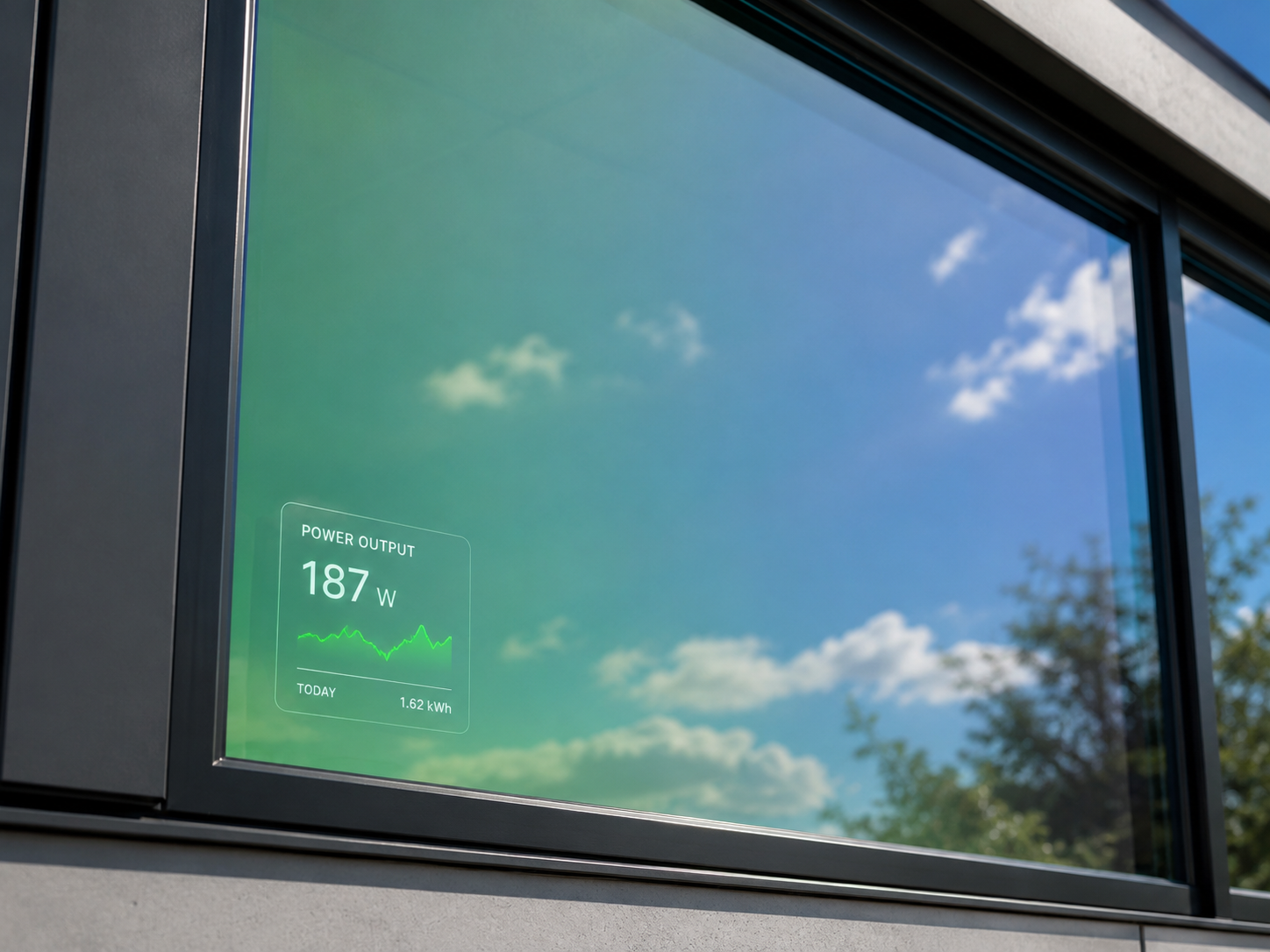
For years, solar power was limited by the bulky, opaque nature of silicon panels. You either had them on your roof or they were not there at all. That limitation is finally vanishing. Scientists have perfected transparent solar technology that integrates seamlessly into standard glass. We are now reaching a point where every window in a city skyline can double as a high-efficiency electrical generator without blocking the view or compromising the aesthetic of the building.
The core technology involves coating glass surfaces with organic molecules that absorb light wavelengths invisible to the human eye. These molecules capture ultraviolet and near-infrared light while allowing visible light to pass through completely undisturbed. The captured energy is then funneled to the edges of the glass pane where thin strips of solar cells convert it into usable electricity. This innovation effectively turns the entire glass facade of a building into a giant, silent, and invisible solar array.
This development is a game changer for urban density. Traditional solar panels simply do not have enough surface area in a city environment to power a hundred-story skyscraper. Transparent solar glass solves this problem by using the sheer vertical square footage of the building envelope itself. A modern high-rise covered in this glass can generate a significant portion of its own energy requirements, drastically reducing the demand on the municipal grid.

“We are no longer limited to rooftops. By integrating solar harvesting directly into our window glass, we turn every urban building into a self-sustaining power generator.”
The practical applications extend far beyond commercial office towers. Imagine your smartphone screen charging itself from ambient office lighting or the windows of your car extending your electric vehicle range while you park in the sun. Major manufacturers are already scaling production to bring these glass panels to the residential market. The cost per watt is dropping rapidly as factories pivot to mass-produce these specialized thin-film coatings.
The visual result is a cleaner, more efficient skyline. Because the panels are transparent, the look of the city remains unchanged. We retain the architectural beauty of glass facades while shedding our reliance on massive, remote power plants. This is the definition of distributed energy production, and it is ready to scale globally.