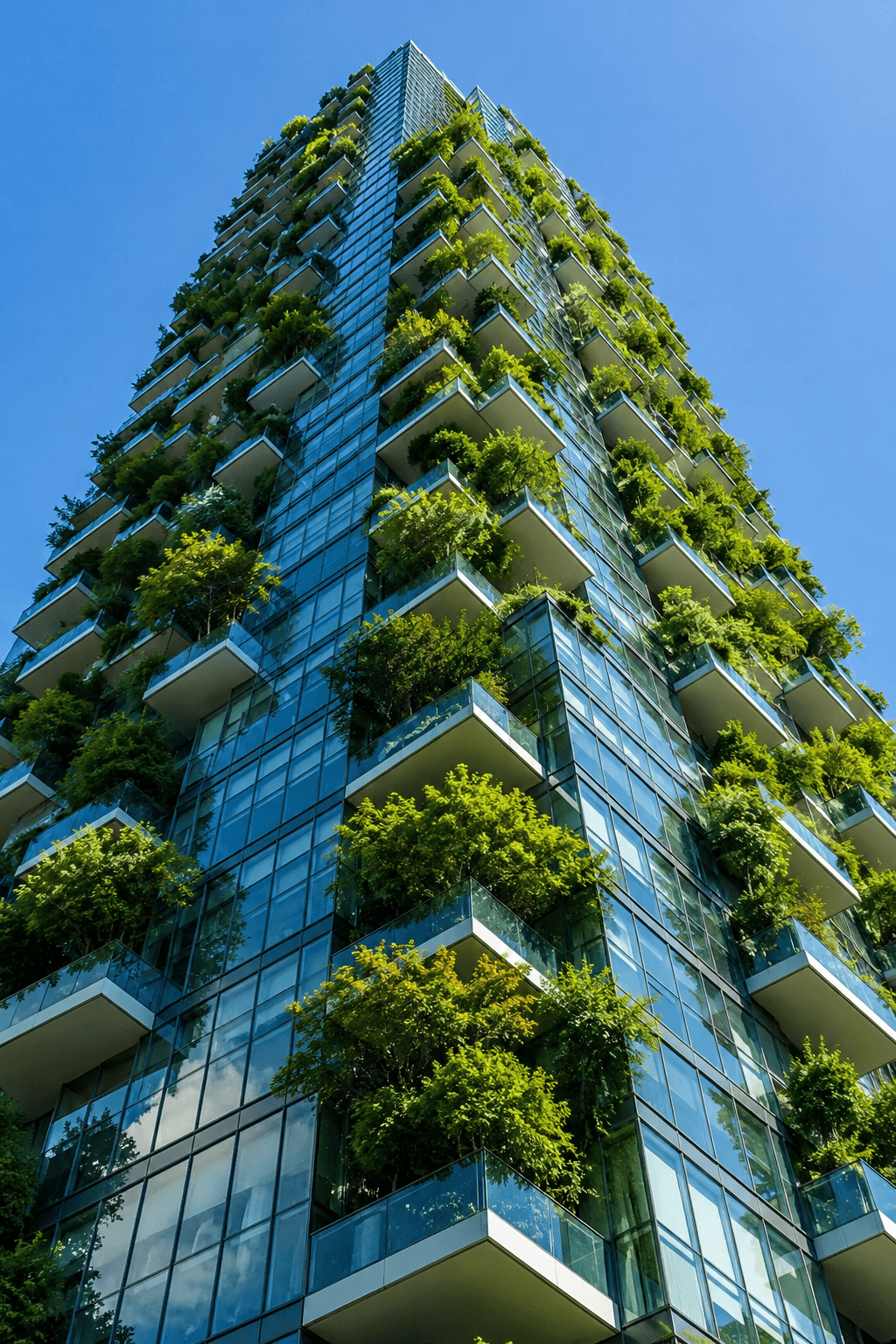
The modern metropolis has long been defined by steel, concrete, and glass. For decades, urban growth meant replacing green fields with gray, lifeless skyscrapers. But as global temperatures rise and air quality in dense cities declines, architects are pivoting to a radical new building philosophy. Instead of clearing forests to make room for buildings, they are building the forests directly into the skyscrapers themselves. These vertical forests represent the future of sustainable, high-density urban living.
A vertical forest is a high-rise building that integrates hundreds of trees, shrubs, and flowering plants directly into its exterior facade. Rather than utilizing simple rooftop gardens, these architectural marvels feature deep, cantilevered concrete balconies designed to hold specialized structural soil. Automated, drip-irrigation systems run throughout the building’s exterior, utilizing recycled greywater from the residents inside to keep the massive vertical ecosystem perfectly hydrated year-round.
The global pioneer of this movement is the famous Bosco Verticale, or Vertical Forest, in Milan, Italy, designed by architect Stefano Boeri. Comprising two residential towers, this completed project hosts over 800 trees, 15,000 shrubs, and 5,000 floral plants. Visually, the buildings change color with the seasons, transitioning from vibrant spring greens to rich autumnal golds. This vertical ecosystem does wonders for the building’s performance because the dense foliage acts as a natural acoustic barrier, absorbing city noise, while shielding the interiors from harsh direct sunlight and drastically reducing air conditioning costs.

“We cannot keep building isolated concrete boxes. By integrating living ecosystems into our high-rise structures, we can turn our densest cities into active carbon sinks.”
Beyond thermal regulation, vertical forests serve as vital ecological corridors for urban wildlife. Birds, bees, and migratory insects that have long been excluded from modern city centers are returning to these vertical habitats. Furthermore, the thousands of plants actively filter out harmful particulate matter from city smog, releasing pure oxygen back into the immediate microclimate and significantly improving local air quality.
As urban populations continue to swell, the vertical forest model is being adopted globally, spanning developments from the Nanjing Vertical Forest in China to the Trudo Vertical Forest in Eindhoven, Netherlands. Architects are pushing the boundaries even further by experimenting with structural timber and self-healing bio-concrete to make these towers completely carbon-neutral from the ground up. By blending advanced structural engineering with the raw power of nature, these living towers are proving that humanity’s future doesn’t have to be gray; it can be incredibly green.