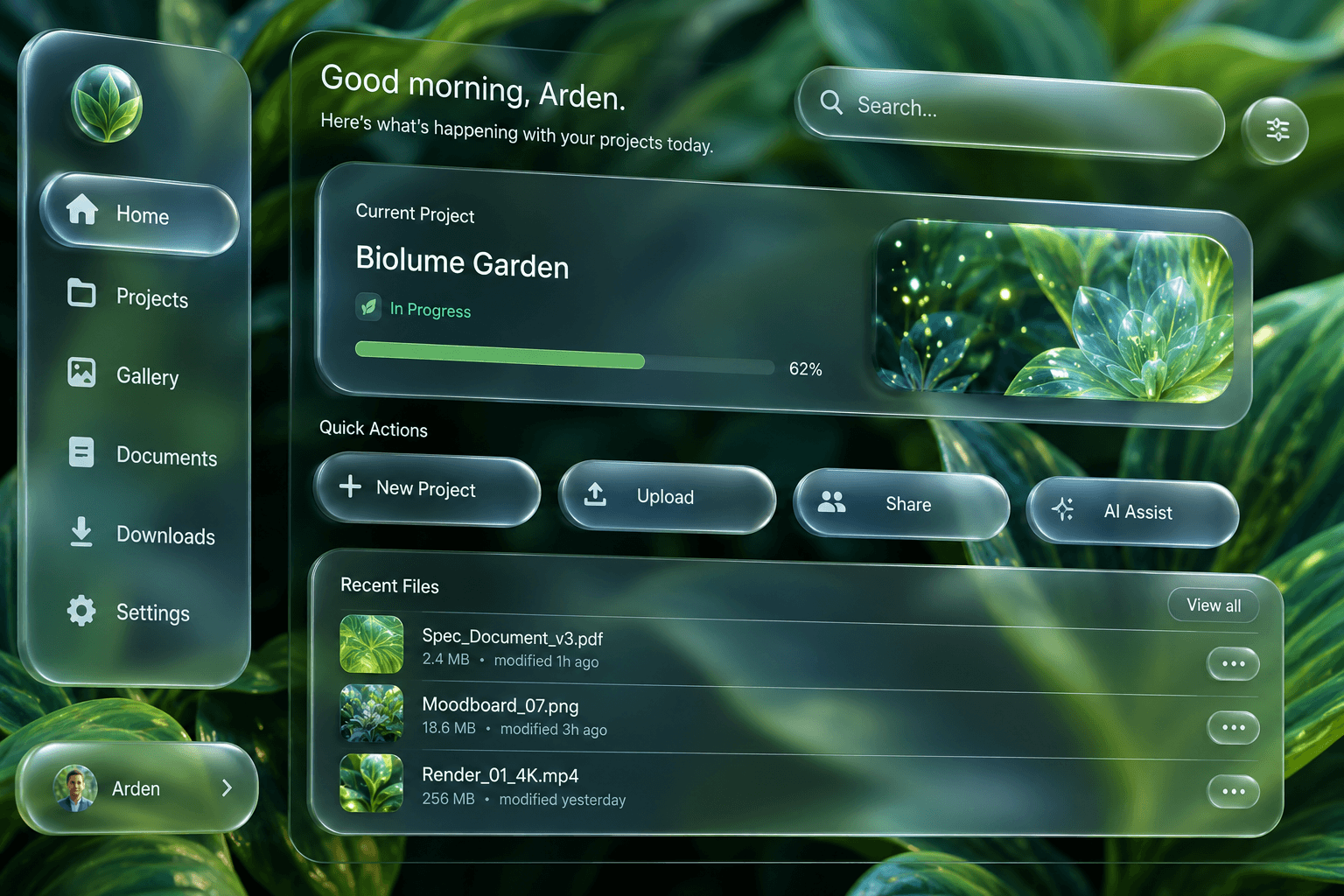
For the past decade, the digital world has been trapped in a flat, minimalist prison. Operating systems, mobile applications, and websites have stripped away all depth, texture, and personality in favor of flat, solid-colored blocks and simple geometric icons. While this flat design era made websites faster to load on early mobile networks, it also made the internet look boring and sterile. Now, driven by the rise of spatial computing and high-performance screens, designers are bringing back the beautiful, tactile depth of the early 2000s.
The movement, often referred to as “Glassmorphism” or “Neomorphic Design,” is a direct evolution of the classic Windows Vista and Windows 7 “Aero” aesthetic. The core visual element is glass, which manifests as translucent, semi-transparent panes floating in 3D space. By utilizing modern CSS features like backdrop-filter and semi-transparent borders, developers can create digital layouts that look like frosted glass panels. These panels let background colors softly bleed through, mimicking how physical glass refracts light in the real world.
This aesthetic resurgence is not just about nostalgia; it is highly functional. In spatial computing operating systems, like Apple’s visionOS, flat interfaces fail to convey depth. When you are looking at an interface floating in your actual living room, it needs to obey the physical laws of light and shadow to feel real. A glassmorphic panel naturally catches virtual light, casts soft shadows onto the environment behind it, and gives the user a clear, intuitive sense of interactive space.

“Flat design was a compromise for low-bandwidth networks and low-resolution screens. Today’s hardware allows us to build rich, tactile interfaces that feel incredibly premium and satisfying to touch.”
Crucial to this visual upgrade is the return of skeuomorphism, the practice of designing digital elements to mimic their real-world counterparts. Companies like Microsoft are leaning into this with their “Fluent Design System,” utilizing materials like “Mica” and “Acrylic” to bring back real-time light refraction and depth. Buttons are no longer flat, lifeless rectangles. Instead, they are designed as glossy, physical gel pills that appear to depress when clicked, while highlights, gradients, and soft glowing drop shadows are carefully utilized to make interactive elements highly intuitive.
As this design philosophy takes over major operating systems and web platforms, the internet is transforming from a flat, corporate catalog into a vibrant, glowing, and highly immersive environment. By combining modern lightweight coding practices with the rich, luxurious depth of glass and water textures, developers are proving that we don’t have to sacrifice visual beauty for speed. The future of the web is textured, deep, and beautifully luminous.