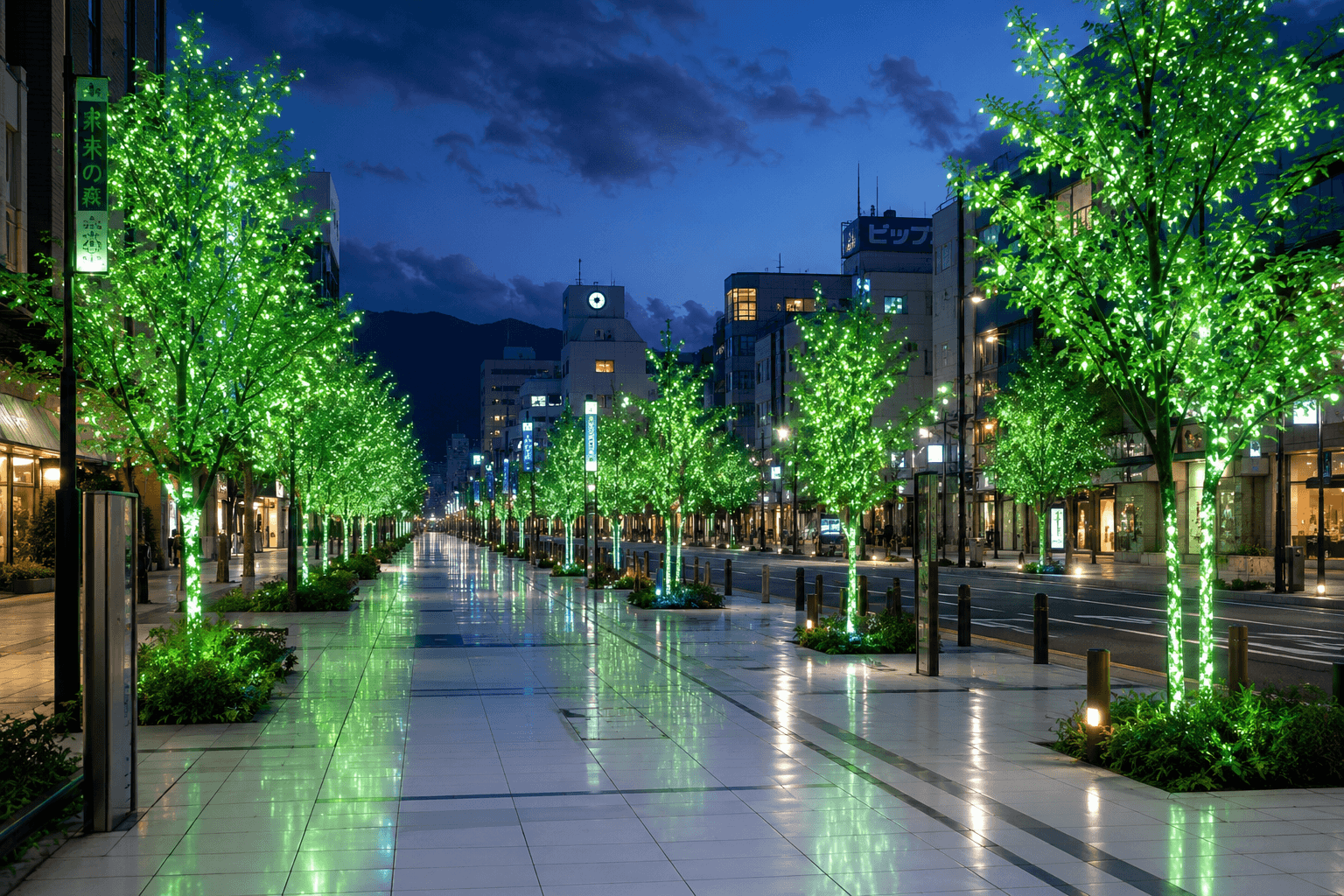
For over a century, the modern world has relied on high-pressure sodium and LED bulbs to illuminate our cities at night. While functional, our current electrical grids consume massive amounts of power and generate significant light pollution, disrupting global ecosystems and human sleep cycles. But a quiet revolution is taking root in the field of synthetic biology. Cities across Europe and East Asia are experimenting with a radical alternative: replacing artificial streetlights with living, self-sustaining, bioluminescent flora.
The concept relies on bioluminescence, the chemical process by which living organisms like fireflies, deep-sea jellyfish, and certain fungi emit light. By isolating the genetic sequence responsible for this natural glow, specifically the enzyme luciferase, and inserting it into the genome of common plants, synthetic biology firms have achieved massive breakthroughs. For instance, the biotech company Light Bio recently commercialized the “Firefly Petunia,” which continuously emits a bright, natural green glow by utilizing genes sourced from bioluminescent mushrooms.
Imagine walking down a busy city avenue where the sidewalks are lined with towering, glowing trees instead of cold metal poles. The leaves emit a calming, bioluminescent green-teal glow, while planters filled with glowing moss illuminate the pathways below. This soft, organic light is naturally diffuse, preventing the harsh glare associated with modern LEDs while providing more than enough visibility for pedestrians and vehicles alike.

“We are not just designing a new light bulb; we are integrating a living ecosystem into our urban infrastructure. Trees do not just light our paths; they actively clean our air and cool our concrete as well.”
Beyond the obvious aesthetic appeal, the environmental and economic benefits are staggering. Street lighting accounts for up to 40 percent of an average municipality’s electricity budget. Transitioning even a fraction of this infrastructure to bioluminescent trees would save millions of dollars annually and drastically cut carbon emissions. Startups like France’s Glowee have spent years designing municipal lighting installations using marine bioluminescent bacteria, demonstrating that biological light can safely illuminate public parks and plazas.
While early prototypes produced only faint glows visible in pitch darkness, recent genetic breakthroughs have increased the brightness of bioluminescent plants by over 100 times. As these genetic engineering and micro-algae containment techniques continue to mature, the transition from heavy industrial grids to glowing, self-sustaining botanical networks will completely redefine what it means to step outside at night.